
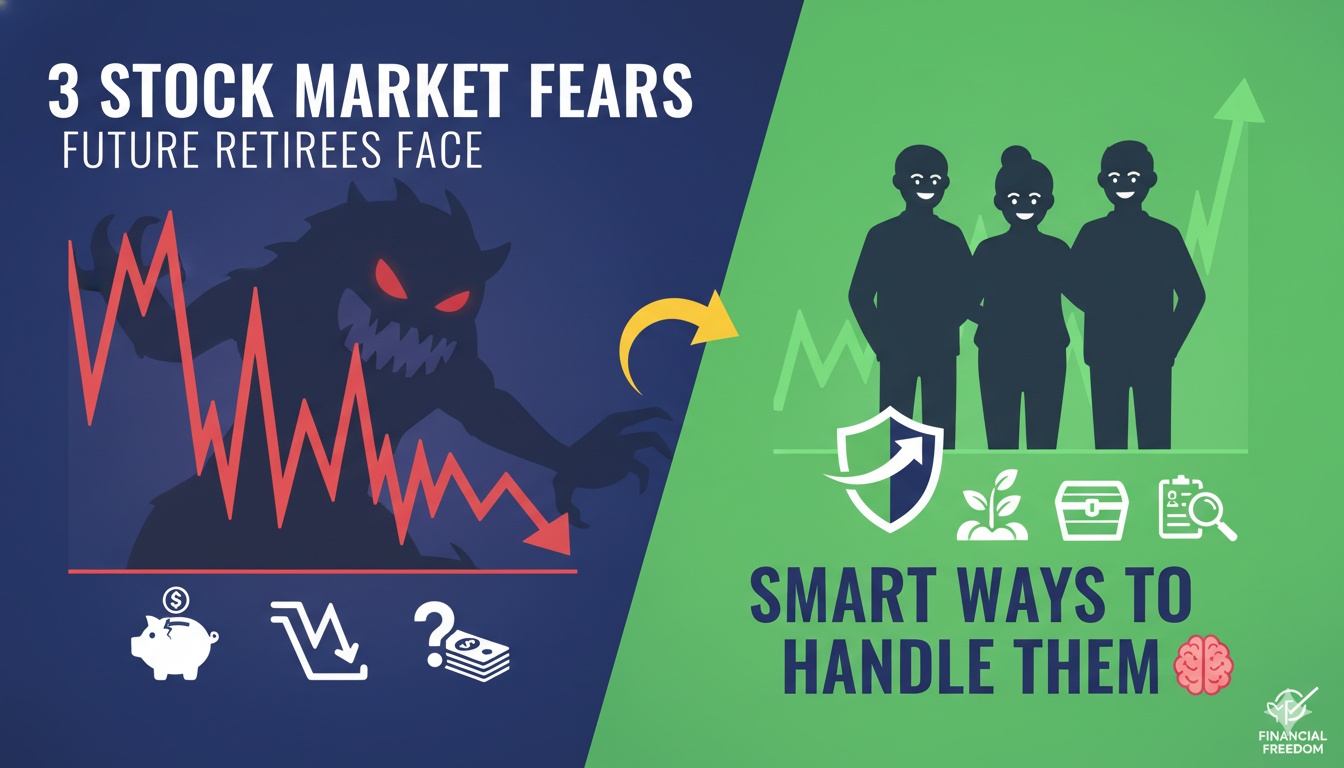
“Future retirees often grapple with the dread of a sudden market plunge eroding their nest eggs just before retirement, concerns over inadequate long-term stock returns failing to sustain their lifestyles, and the risk of forgoing potential growth by shifting too conservatively into bonds or cash. This article outlines these fears with current market insights, including the S&P 500 at 6,932, inflation at 2.7 percent, and average life expectancy reaching 79 years, while offering practical strategies like diversification, balanced asset allocation, and incorporating dividend-focused investments to mitigate them.”
As the S&P 500 hovers around 6,932 amid a volatile start to the year, with the VIX volatility index at 17.76 signaling moderate market anxiety, many approaching retirement find themselves haunted by the specter of unpredictable stock movements. The median retirement savings for Americans stands at $87,000, but for those aged 55-64, it’s $185,000—a figure that underscores the urgency of addressing potential pitfalls. With bond yields on the 10-year Treasury at 4.22 percent providing a safer but lower-return alternative, balancing growth and preservation becomes paramount.
Fear 1: A Devastating Stock Market Crash Right Before Retirement
One of the most visceral worries is the timing of a market downturn, often referred to as sequence of returns risk. Imagine building a portfolio over decades only to see it slashed by 20-30 percent in the months leading up to your planned exit from the workforce. Recent history amplifies this concern: the 2022 market turbulence saw both stocks and bonds decline simultaneously, eroding confidence in traditional safe havens. For someone with $537,560 in average savings for ages 55-64, a sharp drop could force delayed retirement or reduced withdrawals, especially when the average annual retiree expenditure nears $59,616.
This fear is compounded by current economic signals. The Dow recently crossed 50,000 for the first time, but tech selloffs have dragged indices lower, with the Nasdaq down over recent weeks. Individual investors remain brave despite bubble fears, yet geopolitical unrest and potential tariffs loom as catalysts for further swings. Retirees nearing the finish line can’t afford to sell low during a dip, as recovering from losses in the early withdrawal phase can deplete principal faster than anticipated.
Smart Ways to Handle It
Diversification across asset classes is a cornerstone defense. Allocate portions to international equities, which have shown resilience in past U.S.-centric crashes, and include sectors like healthcare and consumer staples that tend to weather storms better. For instance, maintaining 50-60 percent in stocks for growth potential while buffering with 30-40 percent in fixed income can soften blows.
Implement a bucket strategy: Divide savings into short-term (cash equivalents for 2-3 years of expenses), medium-term (bonds for the next 5-7 years), and long-term (stocks for growth beyond that). This avoids forced sales during downturns. With current 4-week Treasury bills yielding around 3.68 percent, the short-term bucket provides liquidity without much opportunity cost.
Rebalance annually or after significant market moves. If stocks surge to 70 percent of your portfolio, trim back to target levels, locking in gains. Tools like target-date funds automatically adjust toward conservatism as retirement nears, reducing exposure from 90 percent equities in your 40s to 50 percent by age 65.
Consider annuities for a portion of savings—say 20-30 percent—to guarantee income streams immune to market whims. Fixed annuities currently offer rates competitive with Treasuries, ensuring steady payouts regardless of VIX spikes.
Fear 2: The Stock Market Failing to Deliver Sufficient Long-Term Returns
| Age Group | Median Retirement Savings | Average Retirement Savings | Recommended Stock Allocation |
|---|---|---|---|
| 35-44 | $45,000 | $141,520 | 70-80% |
| 45-54 | $115,000 | $313,220 | 60-70% |
| 55-64 | $185,000 | $537,560 | 50-60% |
Another gnawing doubt is whether equities will generate the historical 7-10 percent annualized returns needed to outpace inflation and support decades in retirement. With life expectancy hitting a record 79 years, a 65-year-old might need funds lasting 20-30 years. Yet, high valuations— the S&P 500’s price-to-earnings ratio elevated amid AI hype—raise questions about future performance. Recent surveys show retirees prioritizing dividend income over portfolio size, as market turbulence in 2022 highlighted the unreliability of growth alone.
Inflation at 2.7 percent erodes purchasing power subtly but relentlessly; $100,000 today might buy only $74,000 worth of goods in 20 years at that rate. If stock returns average just 5-6 percent due to economic slowdowns or persistent high interest rates, savings could fall short. Data from 1987-2022 shows every major decline reversed within a year, but prolonged low-return periods, like the 2000s “lost decade,” linger in memory.
Tech-heavy portfolios exacerbate this, with the S&P North American Technology Software Index down 18 percent this year. Retirees fear their nest eggs won’t compound enough to cover rising healthcare costs, which average $11,000 more in annual premiums for many.
Focus on total return strategies emphasizing dividends and reinvestment. Shift toward high-quality dividend aristocrats—companies raising payouts for 25+ years—like those in utilities or consumer goods, yielding 3-4 percent reliably. This creates income streams buffering low-growth phases; for a $500,000 portfolio, 3 percent yield generates $15,000 annually without touching principal.
Incorporate alternative investments like real estate investment trusts (REITs) or infrastructure funds, which offer 4-6 percent yields and inflation hedges. With Treasury yields at 3.5-4 percent across maturities, ladder bonds to capture rates while maintaining liquidity.
Stress-test your portfolio using Monte Carlo simulations, factoring in varied return scenarios. Aim for a 4 percent withdrawal rate adjusted for inflation, but flex down to 3 percent in lean years. Boost contributions now: The 2026 401(k) limit is $24,500, plus $8,000 catch-up for those 50+, allowing aggressive saving to compound over remaining working years.
Explore low-cost index funds tracking broad markets, as they historically outperform active strategies in low-return environments. With the market’s capex spending by S&P 500 firms signaling confidence in future booms, patience in holding diversified equities pays off.
Fear 3: Missing Out on Growth by Playing It Too Safe
The flip side is over-caution: Shifting heavily into bonds or cash to avoid volatility, only to watch inflation and longevity chip away at real returns. Bonds are out of fashion on Wall Street, with yields like the 10-year at 4.22 percent barely beating 2.7 percent inflation after taxes. A one-in-four chance of stocks losing money over five years in real terms exists, but history shows equities outperform fixed income over decades.
For retirees, this fear manifests as opportunity cost. Those who fled to cash post-2020 crash missed the Dow’s climb to 50,137. With average savings for 60s at nearly $1.2 million in some datasets, but medians much lower, under-investing in stocks could mean running out of money by age 85-90, especially with women living to 81.4 years on average.
Economic fears have prompted some to pare back savings, yet individual investors brave on despite bubble concerns. Geopolitical risks top worries, but pulling back too soon forfeits compounding.
Adopt a dynamic asset allocation gliding toward safety gradually. Start with 60 percent stocks at age 60, reducing by 1-2 percent yearly. This captures growth while building defenses. Use hybrid funds blending stocks and bonds for built-in balance.
Leverage Roth conversions to minimize taxes on growth assets, allowing equities to compound tax-free. With IRA limits at $7,500 plus $1,100 catch-up, maximize these for growth-oriented holdings.
Incorporate ESG or thematic funds targeting long-term trends like AI or renewables, where capex is surging despite short-term skepticism. Shares of big spenders may lag now but position for booms.
Monitor and adjust based on personal health and spending. If longevity runs in your family, maintain higher equity exposure longer. Pair with longevity annuities starting payouts at 80-85, hedging outliving risk while keeping more in stocks.
| Leading Cause of Retirement Derailment | Percentage Impact on Savings | Mitigation Strategy |
|---|---|---|
| Market Volatility | 20-30% potential loss | Diversification |
| Inflation Erosion | 2-3% annual reduction | Dividend Stocks |
| Low Returns | 4-6% shortfall over decade | Alternative Assets |
Disclaimer: This news report provides general tips based on available sources and is not personalized financial advice.







Leave a Reply