
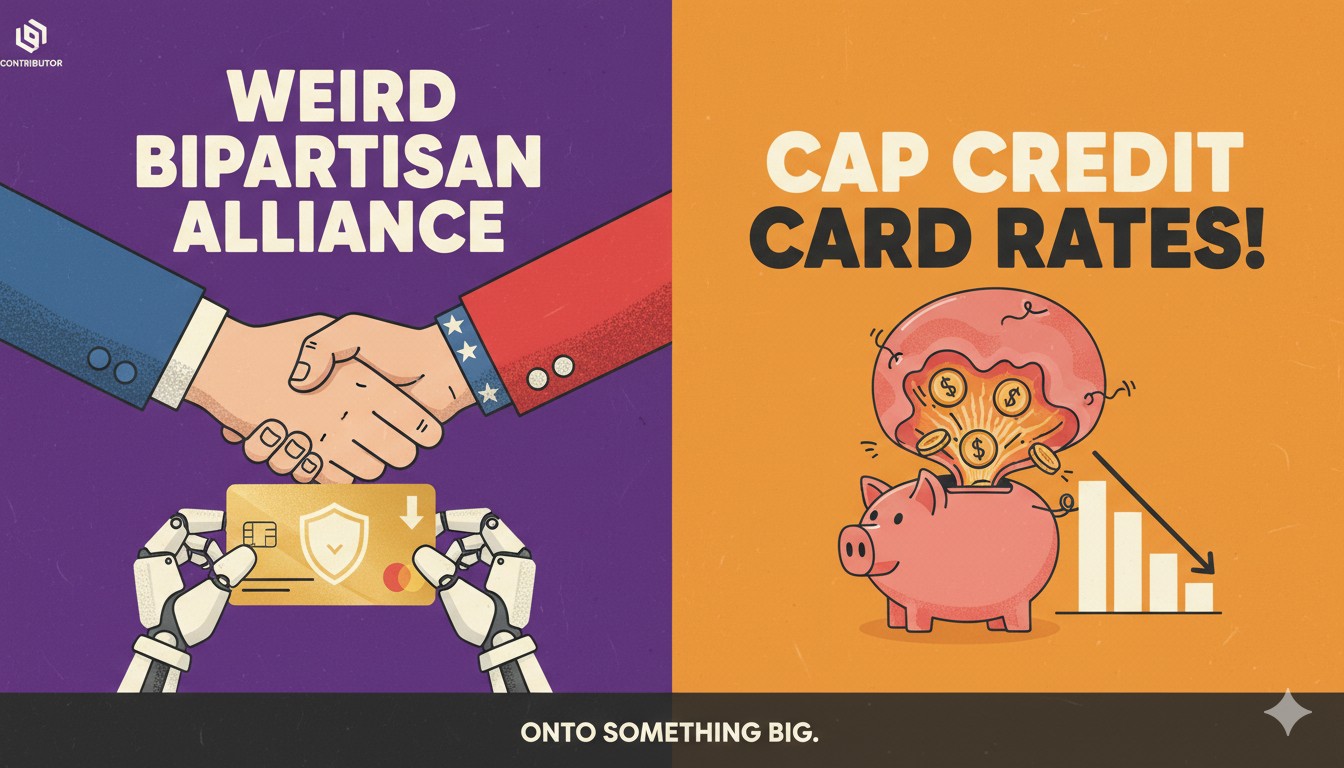
“A surprising coalition of progressive Democrats and conservative Republicans is rallying behind proposals to limit credit card interest rates to 10%, aiming to ease the burden on millions of Americans grappling with record debt levels amid persistent inflation. Backed by high-profile figures, these bills could slash annual interest payments by billions, though critics warn of reduced credit access and market disruptions.”
In an era where political divides seem insurmountable, a rare consensus is emerging on Capitol Hill around the issue of credit card interest rates. Lawmakers from opposite ends of the ideological spectrum are uniting to challenge the financial industry’s grip on consumer borrowing costs, proposing caps that would dramatically alter how Americans manage their debt.
The Current Landscape of Credit Card Debt
American households are carrying unprecedented levels of credit card balances, totaling over $1.23 trillion as of the latest figures. This surge reflects broader economic pressures, including lingering effects from supply chain disruptions and elevated living costs. Average interest rates on these cards hover around 19.65%, with some accounts charging as high as 25% or more for those with lower credit scores. For a typical balance of $9,326—the average per indebted household—this translates to hundreds of dollars in annual interest alone, compounding the strain on family budgets.
To illustrate the scale:
| Category | Amount/Rate | Impact on Average Household |
|---|---|---|
| Total U.S. Credit Card Debt | $1.23 Trillion | Represents about 6.6% of overall household debt of $18.59 trillion |
| Average Balance per Indebted Household | $9,326 | Monthly interest accrual at 19.65% APR: Approximately $153 |
| Average APR for New Offers | 23.79% | Higher for subprime borrowers, often exceeding 25% |
| Delinquency Rate | Rising to 3.2% | More than 10% of accounts 90+ days past due in some demographics |
These numbers underscore a system where revolving debt has become a staple for covering essentials like groceries, medical bills, and home repairs. With federal funds rates holding steady after recent hikes, card issuers have maintained wide margins, leading to accusations of profiteering.
Key Players in the Bipartisan Coalition
The movement draws from populist sentiments on both sides. Progressive voices argue that unchecked rates exploit working families, trapping them in cycles of debt that hinder economic mobility. Meanwhile, conservative proponents frame the issue as a fight against corporate overreach, aligning with broader anti-establishment rhetoric.
Notable figures include a Democratic representative known for advocating economic justice, teaming up with a Republican counterpart from Florida to introduce legislation capping rates at 10%. This bill seeks to impose a temporary ceiling, with penalties for violations including forfeiture of interest on offending accounts. Similarly, a Missouri senator has pushed a measure to lock rates at 10% for five years, emphasizing relief for rural and middle-class borrowers squeezed by urban financial elites.
Even executive influence is at play, with calls for a one-year 10% cap gaining traction through social media and public statements. This top-down pressure has galvanized support, blending fiscal conservatism with consumer protectionism in a way that defies traditional party lines.
Potential Benefits and Economic Ramifications
Advocates highlight massive savings: A nationwide 10% cap could reduce consumer interest payments by more than $100 billion annually, freeing up funds for spending, saving, or investing. For lower-income households, where credit cards often serve as a lifeline during emergencies, this could mean avoiding predatory alternatives like payday loans, which carry effective rates over 400%.
On a macroeconomic level, lower rates might stimulate consumer confidence, boosting retail sales and economic growth. Proponents point to historical precedents, such as rate restrictions on credit unions (capped at 18%) and military personnel (limited to 36% under existing law), as evidence that caps can work without collapsing the market.
However, the proposals aren’t without controversy. Industry leaders warn that such limits would force banks to tighten lending standards, potentially excluding up to 159 million Americans from credit access. Smaller issuers might exit the market, reducing competition and innovation in rewards programs or fraud protection. Critics also argue that caps ignore underlying costs like default risks and operational expenses, which have risen with inflation.
Legislative Pathways and Challenges
Several bills are winding through Congress, including one that would amend lending laws to enforce a 10% ceiling temporarily, with extensions possible based on economic conditions. Another focuses on immediate implementation for high-balance accounts, prioritizing relief for those with debts over $5,000.
The path forward involves navigating committee hearings and floor votes, where lobbying from financial giants could intensify. Supporters are leveraging public sentiment—polls show over 70% of Americans favor some form of rate regulation—to build momentum. If passed, enforcement would fall to federal regulators, with provisions for monitoring compliance through annual audits.
Broader Implications for Consumer Finance
This alliance signals a shift toward addressing systemic inequalities in banking. Beyond rates, discussions are spilling into related areas like late fees (recently capped at $8 by regulators) and transparency in billing. For borrowers, it means potential tools like rate calculators and debt consolidation incentives could become standard.
In states with higher debt burdens, such as California and New York, local lawmakers are echoing federal efforts with their own proposals. This grassroots-federal synergy could amplify the impact, creating a patchwork of protections until national standards take hold.
Key Points from the Debate
Pro-Cap Arguments : Reduces exploitation, saves billions for consumers, promotes fair lending practices.
Anti-Cap Arguments : Limits credit availability, harms small banks, could drive users to unregulated lenders.
Bipartisan Appeal : Unites anti-corporate populists, appealing to voters tired of high costs.
Historical Context : Echoes past reforms like the 1978 deregulation that allowed rates to soar, now seen by some as overdue for reversal.
As debates heat up, the outcome could reshape how Americans borrow, spend, and save in an increasingly cashless economy.
Disclaimer: This article is for informational purposes only and does not constitute financial advice, legal opinion, or investment recommendations. Readers should consult qualified professionals for personalized guidance.








Leave a Reply