
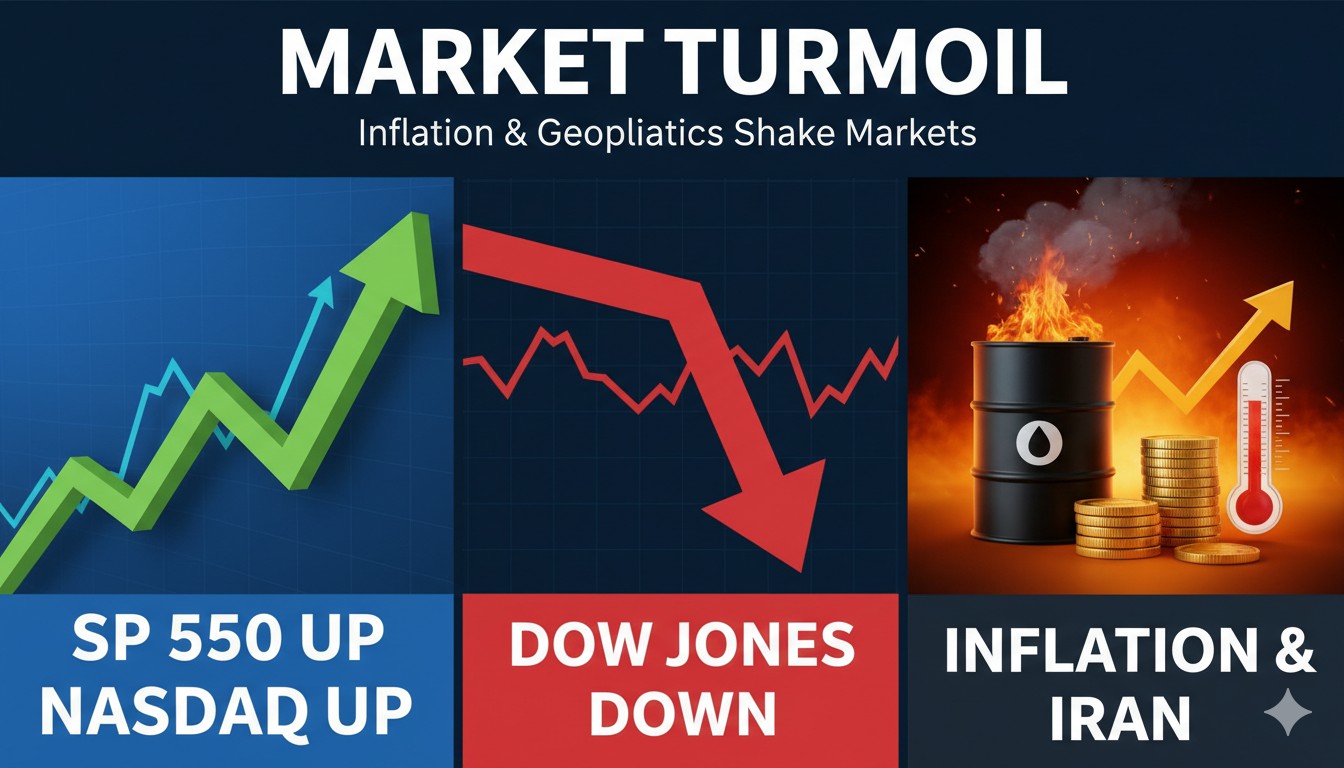
“U.S. major indexes showed divergent performance as the latest inflation reading came in line with expectations, offering some reassurance on price pressures while geopolitical risks from the ongoing Iran conflict continued to pressure energy-sensitive sectors and the broader Dow. The S&P 500 and Nasdaq posted modest gains driven by tech resilience, but the Dow retreated amid higher oil prices and industrial sector weakness.”
Market Performance Amid Inflation Data and Geopolitical Uncertainty
The major U.S. stock indexes closed with a split decision following the release of February Consumer Price Index (CPI) data, which showed headline inflation rising 0.3% month-over-month and 2.4% year-over-year, while core CPI (excluding food and energy) increased 0.2% monthly and 2.5% annually. These figures aligned closely with economist forecasts, providing a measure of stability after recent volatility tied to energy costs and global events.
The S&P 500 finished down slightly in some sessions but overall reflected resilience, closing at 6,781.48, a decline of 14.51 points or 0.21% in the most recent close, though intraday movements showed early strength before fading. Broader market breadth remained positive in tech-heavy segments, with the index benefiting from selective buying in growth-oriented names less exposed to cyclical pressures.
The Nasdaq Composite demonstrated the most notable relative strength, ending at 22,697.10, up 1.16 points or 0.01%. Tech shares led the advance, with artificial intelligence and software-related companies showing particular momentum following strong earnings reports from key players in cloud computing and infrastructure. This helped offset broader concerns, pushing the index toward recent highs and underscoring investor preference for sectors perceived as having durable demand regardless of macroeconomic headwinds.
In contrast, the Dow Jones Industrial Average slipped to 47,706.51, down 34.29 points or 0.07%. The blue-chip index faced heavier selling pressure from its heavier weighting in industrials, financials, and energy-related components, which bore the brunt of elevated oil volatility. Recent sessions saw sharper declines at times, with the Dow dropping hundreds of points intraday before paring losses.
Fresh inflation data offered a balanced view. While the numbers did not signal accelerating price pressures that might force aggressive Federal Reserve tightening, they also failed to provide clear evidence of rapid disinflation. Shelter costs continued to exert upward influence, though energy components showed moderation in some areas. Core measures hovering around 2.5% kept the Fed’s dual mandate in focus, with markets pricing in a cautious path for interest rates amid ongoing data dependence.
Geopolitical developments involving Iran remained a dominant force. Escalating tensions, including airstrikes and responses affecting regional stability, drove significant swings in crude oil prices. West Texas Intermediate and Brent benchmarks experienced sharp rallies at points, briefly pushing toward higher levels not seen in years, before partial pullbacks. Oil’s surge added inflationary undertones and squeezed margins for energy-dependent industries, contributing to downside pressure on transportation, manufacturing, and consumer discretionary sectors. Energy stocks showed mixed results, with some producers benefiting from higher prices while refiners and downstream players faced headwinds.
Sector rotation highlighted the session’s dynamics:
Technology and communication services outperformed, buoyed by innovation-driven narratives and lower sensitivity to energy costs.
Energy and materials lagged amid oil volatility and supply disruption fears.
Consumer staples and healthcare provided defensive support, attracting flows seeking stability.
Financials wavered as bond yields showed modest increases following the inflation print, with the 10-year Treasury yield ticking higher but remaining contained.
Key economic crosscurrents included steady consumer spending signals in recent reports, though rising energy expenses posed risks to household budgets. Retail gas prices climbed noticeably in recent weeks, adding to broader cost-of-living concerns. The dollar showed resilience in spots, reflecting safe-haven demand amid global uncertainties.
Investors continued to monitor central bank communications and upcoming data points, including potential updates on personal consumption expenditures (PCE) inflation, the Fed’s preferred gauge. With core PCE estimates in recent months around 2.8-3.0% in trailing periods, any deviation could influence rate expectations.
Market volatility, as measured by the VIX, remained elevated compared to calmer periods earlier in the year, reflecting uncertainty over how long geopolitical strains might persist and their ultimate impact on global growth.
Major Index Closing Levels (Most Recent Session)
| Index | Close | Change | % Change |
|---|---|---|---|
| Dow Jones Industrial Average | 47,706.51 | -34.29 | -0.07% |
| S&P 500 | 6,781.48 | -14.51 | -0.21% |
| Nasdaq Composite | 22,697.10 | +1.16 | +0.01% |
The interplay between contained inflation readings and persistent external risks from the Iran situation shaped a cautious trading environment, with gains in growth sectors partially offsetting broader pressures on cyclical names.
Disclaimer: This is for informational purposes only and does not constitute investment advice, financial recommendations, or endorsements of any security or strategy.









Leave a Reply