
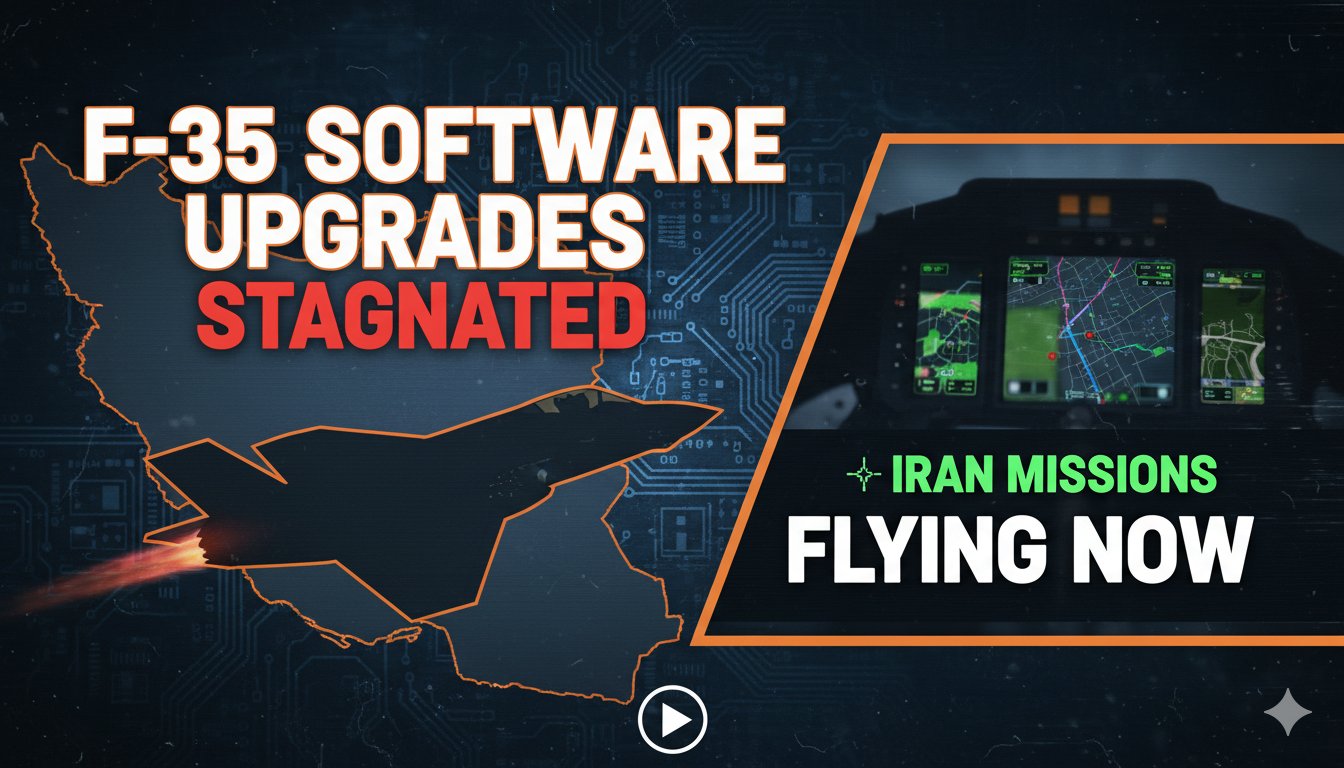
**” Attempts to upgrade the F-35’s software have stagnated, with no new combat capabilities delivered in the past year, according to the Pentagon’s latest operational testing report. This comes even as U.S. and allied F-35 jets actively conduct missions over Iran in the ongoing conflict. The critical Technology Refresh 3 (TR-3) upgrade—intended to enable advanced features—was described as predominantly unusable for much of last year due to persistent stability issues, capability shortfalls, and newly discovered deficiencies. The report highlights a broader failure to meet agile development timelines, leaving the world’s most advanced fighter fleet reliant on older configurations amid high-stakes operations. “**
F-35 Software Upgrades Stagnate Amid Active Combat Role in Iran Operations
The Lockheed Martin F-35 Lightning II continues to serve as a cornerstone of U.S. and allied airpower, particularly in the escalating conflict involving Iran. U.S. Air Force, Navy, and Marine Corps variants, alongside Israeli F-35I Adir aircraft, have been instrumental in striking Iranian air defenses, command centers, missile sites, and other strategic targets. These operations have included suppressing enemy air defenses to enable follow-on strikes by bombers and other platforms, as well as achieving the type’s first confirmed air-to-air kill against a manned Iranian Yakovlev Yak-130 aircraft over Tehran.
Despite this proven operational effectiveness, the F-35 program faces significant internal hurdles in its software modernization efforts. The Pentagon’s Director of Operational Test & Evaluation (DOT&E) annual report underscores a troubling lack of progress in delivering reliable, combat-ready software enhancements. Efforts to field new capabilities have effectively stalled, with zero new combat functionalities added over the past year. This stagnation persists even as F-35s undertake demanding real-world missions, relying on pre-upgrade software baselines that limit full exploitation of the jet’s potential.
At the heart of these challenges lies Technology Refresh 3 (TR-3), a foundational hardware and software overhaul designed to dramatically increase computing power, expand memory, and upgrade displays and sensors. TR-3 serves as the backbone for the much broader Block 4 modernization package, which aims to integrate advanced weapons, improved electronic warfare systems, enhanced sensor fusion, and new targeting capabilities. Originally targeted for full operational capability years ago, TR-3 encountered severe setbacks, including software instability that rendered it largely non-functional during extensive portions of the previous year.
Key issues with TR-3 included frequent crashes, incomplete integration of new hardware components, and an ongoing stream of deficiencies identified during testing. These problems forced a year-long pause in deliveries of new F-35s equipped with the upgrade, leading to dozens of aircraft stored at production facilities awaiting resolution. While a “truncated” interim software version eventually allowed deliveries to resume and backlog aircraft to be cleared, full combat-capable TR-3 remains elusive. Testing teams reported that the configuration struggled to support rigorous combat scenarios, with stability shortfalls preventing thorough evaluation.
The DOT&E assessment paints a grim picture of the program’s software development process. It notes a consistent failure to adhere to schedule and performance expectations under the agile framework adopted for F-35 upgrades. The cycle of identifying, addressing, and verifying fixes has bogged down, resulting in no meaningful advancement in capability. This comes at a time when the F-35 fleet is demonstrating its stealth, sensor, and networking advantages in contested environments over Iran, where it has effectively neutralized radar systems, missile launchers, and command infrastructure without losses.
The irony is stark: jets flying missions that demand cutting-edge performance are tethered to outdated software architectures, while promised enhancements languish in development limbo. Block 4, reliant on TR-3 maturity, has seen its scope repeatedly scaled back and timelines extended—potentially into the early 2030s—with cost overruns mounting into the billions. The Pentagon has already reduced procurement quantities in recent budgets, citing the need for more reliable and relevant configurations before committing to full-rate buys.
Operational commanders continue to leverage the F-35’s existing strengths in the current theater. The aircraft’s low observability enables penetration of defended airspace, its advanced sensors provide superior situational awareness, and its data-sharing capabilities facilitate coordinated strikes. In recent actions, F-35s have paved the way for heavier platforms, downed enemy aircraft in air-to-air engagements, and supported regime-targeting efforts. Yet the absence of TR-3/Block 4 features means pilots and maintainers operate without enhancements that could further reduce workload, improve targeting precision, or expand weapon options.
The program’s struggles highlight systemic issues in modern fighter development: the complexity of integrating massive software suites with evolving hardware, supply chain vulnerabilities for specialized components, and the difficulty of achieving stability in a system-of-systems design. While Lockheed Martin has claimed completion of key TR-3 software elements and anticipates eventual full certification, the Pentagon’s testing office remains skeptical of rapid turnaround.
As the Iran conflict demonstrates the F-35’s value in peer-level operations, the stagnation in upgrades raises questions about long-term sustainment and adaptability. The fleet’s current configuration proves sufficient for many tasks, but the gap between potential and delivered capability underscores ongoing risks to the program’s reputation and taxpayer investment.
Disclaimer: This is an independent news analysis based on publicly available defense reporting and official evaluations. It does not constitute investment, operational, or policy advice.











Leave a Reply