
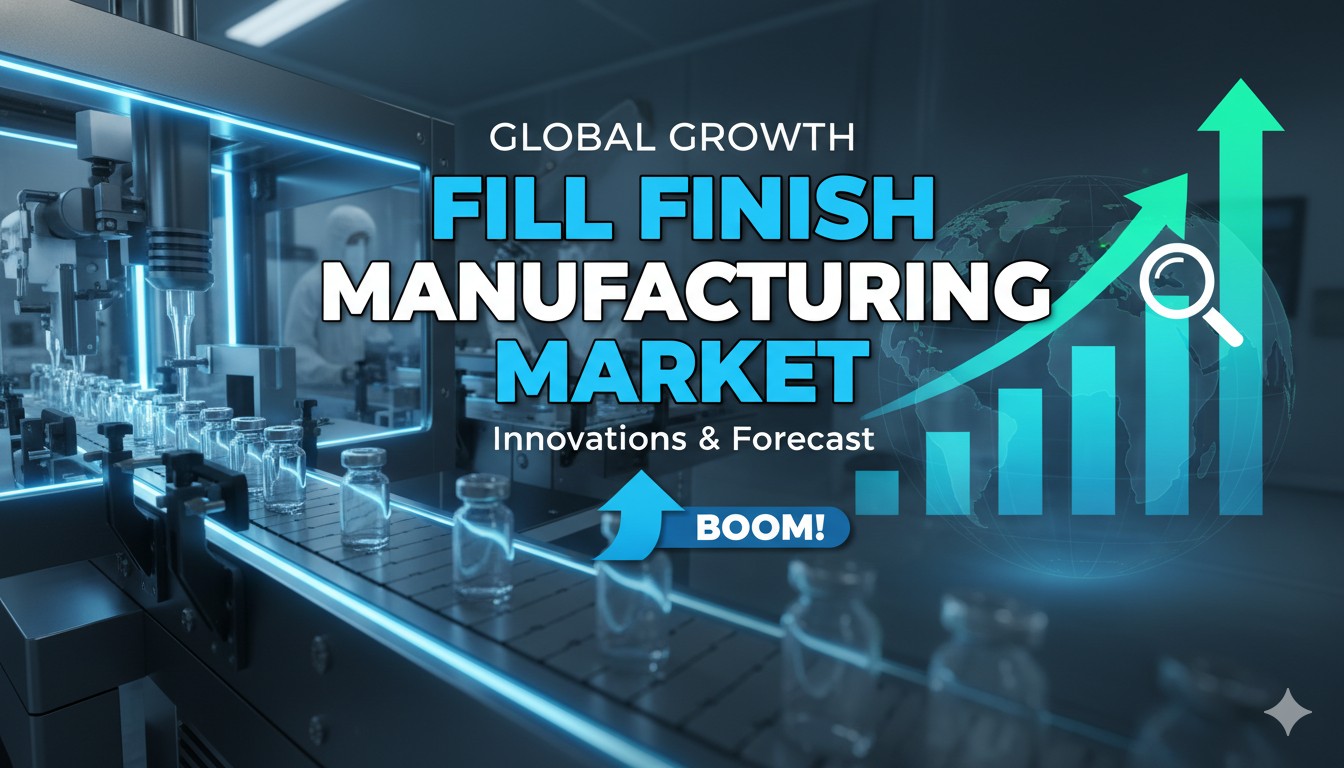
“The fill finish manufacturing market is on a robust growth trajectory, valued at over $18 billion in 2025 and projected to reach $28 billion by 2030 at a CAGR of 8.9%. Driven by outsourcing trends, regulatory compliance, and automation, key players are expanding capacities amid rising biologics production, though challenges like supply chain disruptions persist.”
Fill Finish Manufacturing Market Overview
The fill finish manufacturing sector, crucial for the final stages of pharmaceutical production, involves filling drug substances into containers, sealing, and labeling for distribution. This market caters primarily to biopharmaceuticals, vaccines, and injectables, with North America holding the largest share due to advanced infrastructure and high R&D investments.
Market Size and Projections
Current valuations place the global market at approximately $18.36 billion, with expectations of steady expansion driven by increasing demand for complex biologics and personalized medicines. Forecasts indicate a compound annual growth rate (CAGR) of 8.9%, pushing the market toward $28.14 billion by 2030. Europe and Asia-Pacific regions are emerging as high-growth areas, fueled by cost-effective manufacturing and government incentives for pharma exports.
Key Drivers Fueling Growth
| Segment | 2025 Value (USD Billion) | Projected 2030 Value (USD Billion) | CAGR (%) |
|---|---|---|---|
| Consumables (Vials, Syringes, Cartridges) | 10.5 | 16.2 | 9.0 |
| Instruments (Filling Machines, Sealers) | 7.86 | 11.94 | 8.7 |
| Biopharmaceuticals End-Use | 12.4 | 19.5 | 9.5 |
| Small Molecules End-Use | 5.96 | 8.64 | 7.7 |
Rising prevalence of chronic diseases in the U.S. has amplified the need for injectable therapies, boosting fill finish operations. Pharmaceutical companies are increasingly outsourcing to contract development and manufacturing organizations (CDMOs) to reduce costs and accelerate time-to-market. Technological advancements, such as ready-to-use (RTU) components and single-use systems, are minimizing contamination risks and enhancing efficiency.
Regulatory pressures, including stricter FDA guidelines on aseptic processing, are compelling investments in compliant facilities. The surge in biosimilars and gene therapies further propels demand, with U.S.-based firms leading in innovation.
Major Players and Competitive Landscape
The market is dominated by a mix of established giants and specialized providers. Syntegon Technology GmbH and I.M.A. S.P.A. excel in automated filling solutions, while Becton, Dickinson and Company (BD) focuses on prefilled syringes. West Pharmaceutical Services Inc. and Gerresheimer AG are key in packaging components, emphasizing sustainability.
Other notable entities include Thermo Fisher Scientific Inc., offering end-to-end services; Cytiva, specializing in bioprocessing; and Catalent Inc., a leader in CDMO outsourcing. Recent mergers and capacity expansions, such as those by Baxter International Inc. and Boehringer Ingelheim, underscore competitive strategies to capture U.S. market share.
Emerging Trends
Automation and robotics are transforming operations, with AI-driven analytics optimizing production yields. Adoption of isolator technology for aseptic filling is on the rise, reducing human intervention. Sustainability initiatives, like eco-friendly packaging, are gaining traction amid investor scrutiny on ESG factors.
In the U.S., partnerships between pharma firms and CDMOs are accelerating, particularly for mRNA-based vaccines post-pandemic lessons.
Challenges and Risks
High capital expenditures for advanced equipment pose barriers for smaller players. Supply chain vulnerabilities, especially for glass vials and stoppers, have led to shortages impacting production timelines. Skilled labor shortages in sterile manufacturing environments add operational hurdles.
Regulatory complexities across states and federal levels can delay approvals, while geopolitical tensions affect global sourcing of raw materials.
Disclaimer: This article is for informational purposes only and does not constitute investment advice, financial recommendations, or endorsements. All data and insights are derived from publicly available reports and industry analyses.









Leave a Reply