
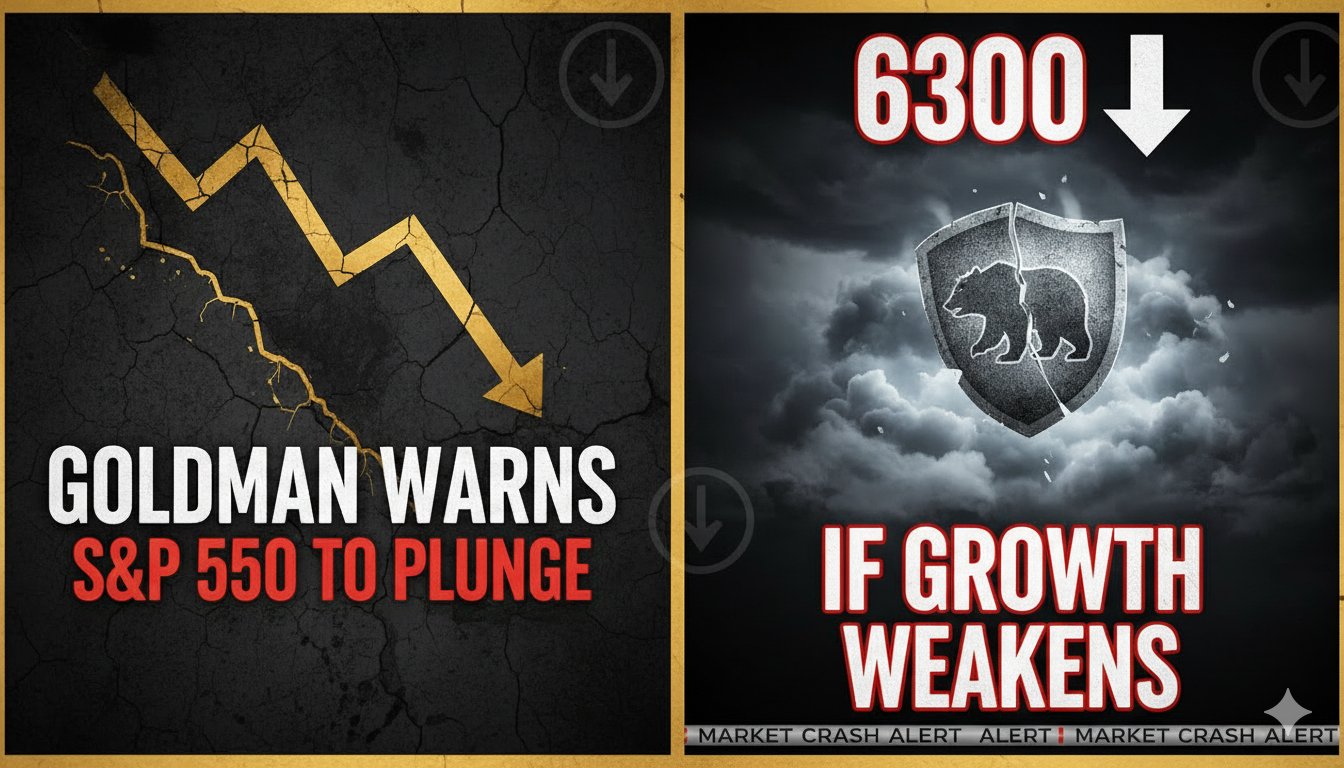
Goldman Sachs has cautioned that the S&P 500 could drop to around 6300 in a moderate growth shock scenario, driven by weakening economic momentum, compressed valuations, fading investor sentiment, elevated oil prices, and escalating geopolitical risks linked to tensions in the Middle East, particularly involving Iran. This downside risk stands in contrast to the bank’s broader constructive view on equities for 2026, where solid corporate earnings and supportive policy conditions are expected to fuel gains, but persistent headwinds could trigger meaningful pullbacks from current levels near 6630.
Goldman Warns of S&P 500 Downside to 6300 if Economic Growth Falters
Wall Street’s major benchmarks have shown increased volatility in recent sessions, with the S&P 500 pulling back amid a mix of macroeconomic signals and external pressures. Goldman Sachs analysts have highlighted a specific bearish case where a moderate slowdown in U.S. economic growth could push the index down to approximately 6300. This level represents a notable decline from recent trading around 6630-6670, implying a potential drop of roughly 5% or more depending on the exact entry point.
The warning ties directly to evolving risks in the macroeconomic environment. Higher oil prices, fueled in part by geopolitical developments involving Iran, are adding to concerns about inflationary pressures and their drag on consumer and corporate spending. While energy sector participants may see some offset from elevated crude, the broader impact on cyclical industries, industrials, and consumer-facing companies often outweighs those gains. Goldman’s top-down modeling indicates that a 1 percentage point shift in real U.S. GDP growth typically translates to a 3-4% movement in S&P 500 earnings per share, underscoring the sensitivity of equities to any deceleration.
In this moderate growth shock scenario, the bank anticipates a combination of factors converging to pressure multiples. Investor sentiment, which has supported elevated valuations through much of the recent bull run, could weaken quickly if data points confirm softer expansion. Valuation compression would follow as forward price-to-earnings ratios adjust downward to reflect lower growth expectations. The S&P 500 has traded at historically rich levels in recent years, leaving limited buffer against disappointments.
Broader context includes ongoing geopolitical tensions that amplify downside risks. Disruptions tied to Middle East conflicts have contributed to oil price spikes, raising the specter of prolonged energy cost pressures. While modest increases in crude have historically had muted direct effects on aggregate S&P 500 earnings, severe or extended shocks could meaningfully erode the bank’s current 2026 EPS growth outlook of around 12%. This forecast assumes healthy revenue expansion and productivity gains from AI adoption, but those tailwinds could diminish if growth falters.
The bank’s base case remains more constructive for equities in 2026 overall. Strategists project double-digit total returns for the S&P 500, driven by continued earnings momentum, stable labor markets, and supportive Federal Reserve policy. Recent adjustments to economic forecasts reflect a view of sturdy but not explosive growth, with AI-related capital expenditures and corporate profit resilience providing key support. However, the introduction of this explicit downside scenario to around 6300 serves as a reminder that risks are asymmetric in the current environment.
Market participants have already witnessed some of this dynamic in play. The index has experienced periodic corrections amid uncertainty over policy, tariffs, and growth signals. Positioning among hedge funds and other active investors has unwound at times, exacerbating moves. A further deterioration in the outlook could extend these pressures, particularly if upcoming data releases show softening in key areas like consumer spending or industrial activity.
Key Risk Factors Highlighted by Goldman Sachs
Economic Growth Shock : Moderate deceleration in GDP could lead to EPS revisions lower, triggering multiple contraction.
Oil Price Elevation : Geopolitical-driven increases add cost pressures across sectors, with net negative impact on cyclicals despite energy gains.
Geopolitical Tensions : Iran-related developments heighten volatility and risk premiums in equities.
Valuation Sensitivity : Elevated multiples leave room for compression if sentiment sours.
Investor Sentiment Shift : Weakening confidence could accelerate outflows and selling pressure.
Current Market Snapshot
The S&P 500 has hovered in the mid-6600s recently, reflecting a pullback from higher levels earlier in the year. Trading ranges have widened, with daily swings influenced by macro data and headlines. Volume has remained elevated during downside moves, indicating active participation.
For investors, this Goldman warning underscores the importance of monitoring growth indicators closely. Upcoming reports on GDP, employment, and inflation will provide critical clues about whether the moderate shock scenario materializes or if resilient fundamentals prevail. While the base outlook favors continued equity strength, the path to higher levels may include bouts of volatility if growth concerns intensify.







Leave a Reply