
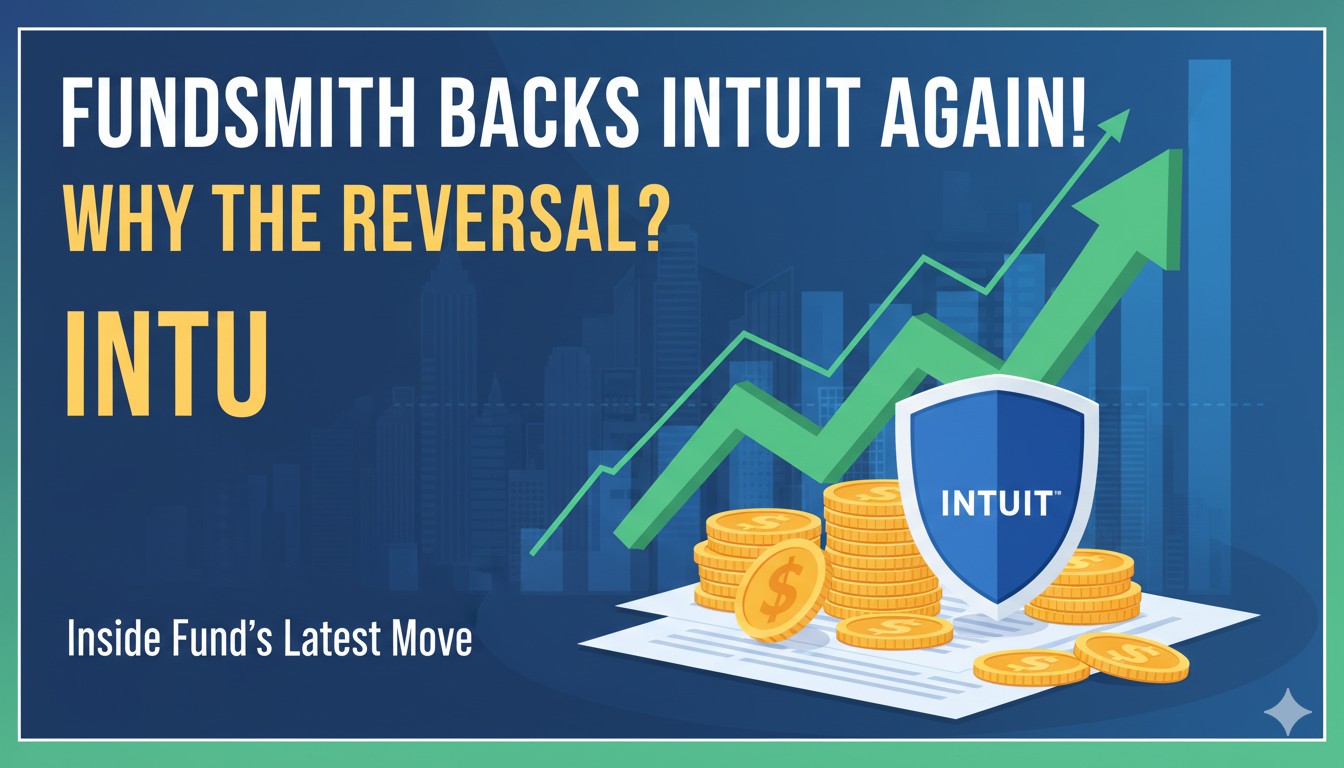
“Fundsmith Equity Fund has rebuilt its position in Intuit after previously exiting due to concerns over the 2021 Mailchimp acquisition, which was seen as an overpriced move outside the company’s core expertise. The fund views the subsequent share price correction as an opportunity, betting on improved management decisions amid Intuit’s strong revenue growth in financial software and services.”
Fundsmith’s Return to Intuit Amid Valuation Reset
Fundsmith Equity Fund, known for its disciplined approach to high-quality global equities, has reinitiated a stake in Intuit, the provider of financial management tools like TurboTax and QuickBooks. The move comes after the fund divested its holdings following Intuit’s acquisition of email marketing platform Mailchimp, which raised red flags about strategic fit and pricing discipline. Fund managers now see value in the stock’s adjustment, anticipating that lessons from the deal will sharpen focus on core strengths.
Intuit’s business model centers on software solutions that streamline accounting, tax preparation, payroll, and payments for small businesses and consumers. The company has demonstrated resilience through consistent innovation, including AI-driven features that automate compliance and financial insights. In its latest fiscal quarter, revenue climbed 18% year-over-year to $3.9 billion, driven by expansion in the small business and self-employed segment, which accounts for a significant portion of earnings.
Despite these operational gains, Intuit’s stock has faced headwinds. Shares have risen modestly by 5.49% over the past 52 weeks but dipped 1.18% in the recent month, reflecting broader market caution around tech valuations and integration challenges from past deals. The current market capitalization stands at approximately $180 billion, with the stock trading around $647 per share. This pricing has allowed Fundsmith to accumulate shares at what it perceives as a more reasonable entry point compared to prior peaks.
Key Metrics Highlighting Intuit’s Appeal
Fundsmith’s investment philosophy prioritizes companies with high returns on capital and strong free cash flow generation. Intuit fits this profile, as evidenced by the following key financial indicators:
| Metric | Value | Context |
|---|---|---|
| Weighted Average ROCE | 31% | Demonstrates efficient capital use, outperforming broader market averages like the S&P 500’s 17%. |
| Free Cash Flow Yield | 3.7% | Indicates undervaluation relative to cash generation potential, supporting dividend growth and share repurchases. |
| Gross Margin | 62% | Reflects pricing power in software subscriptions and services. |
| Operating Margin | 28% | Highlights operational efficiency amid competitive pressures. |
| Free Cash Flow Growth (2025) | 16% | Underscores momentum in core segments despite acquisition-related drags. |
These figures align with Fundsmith’s criteria for “good companies” that can sustain growth without excessive leverage or market hype.
Strategic Context Within Fundsmith’s Portfolio
The reentry into Intuit complements Fundsmith’s emphasis on long-term holdings in quality names. The fund’s overall 2025 performance lagged benchmarks, returning 0.8% against the MSCI World Index’s 12.8%, largely due to avoidance of concentrated tech momentum plays. However, its portfolio companies, including selective tech exposures like Alphabet and Microsoft, maintain superior risk-adjusted metrics, with a Sortino Ratio of 0.75 versus the index’s 0.48.
By Q3 2025, Fundsmith held about 182,000 shares of Intuit valued at $130 million, representing 0.54% of the portfolio. This position has likely grown as the fund continues building amid perceived mispricings. The strategy avoids chasing index heavyweights, focusing instead on businesses with enduring competitive moats, such as Intuit’s dominance in U.S. tax and accounting software, where it serves over 100 million customers.
Potential Catalysts and Risks
Looking ahead, Intuit stands to benefit from regulatory changes favoring digital compliance and the shift toward cloud-based financial tools. Expansion into payments and capital access for small businesses could drive further revenue diversification. However, risks include integration setbacks from acquisitions and competition from fintech disruptors, which Fundsmith is monitoring closely.
The fund’s low portfolio turnover of 12.7% underscores confidence in selections like Intuit, where voluntary trading remains minimal. This reestablishment signals a belief that the company’s fundamentals will prevail over short-term noise.
Disclaimer: This news report is for informational purposes only and does not constitute investment advice, tips, or recommendations. Readers should conduct their own research and consult qualified financial professionals before making decisions. All sources are public domain and not endorsed.










Leave a Reply