
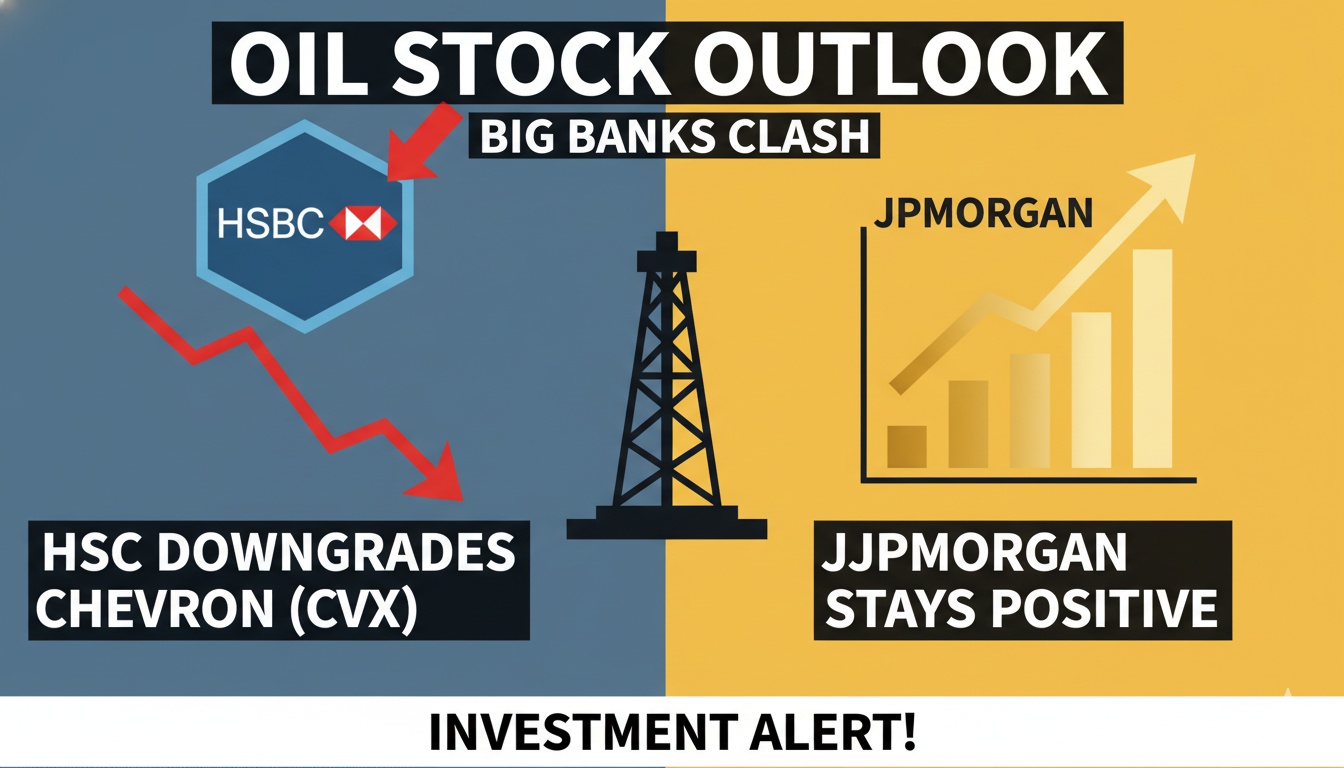
“HSBC has shifted its stance on Chevron (CVX) to Hold from Buy, citing stretched valuations after a robust year-to-date rally, even as it lifts the price target to $180. In contrast, JPMorgan maintains an Overweight rating and raises its target to $181, emphasizing post-merger efficiencies and production momentum. Chevron’s recent quarterly results showed record output but pressured earnings from softer oil prices, with the company targeting significant cost savings and capital discipline moving forward.”
Analyst Shifts Signal Diverging Views on Chevron’s Trajectory
Wall Street’s latest takes on Chevron Corporation (CVX) reflect a nuanced landscape where optimism about operational strengths clashes with caution over current pricing. HSBC’s decision to downgrade the stock stems from the belief that much of the positive momentum—fueled by geopolitical developments and commodity price upticks—has already been baked into the share value. The firm acknowledges Chevron’s solid fundamentals, including a balanced approach to cash generation and shareholder returns, but sees limited near-term upside given the stock’s performance.
On the flip side, JPMorgan’s reaffirmed positive outlook underscores the integrated energy giant’s strategic positioning. The bank points to the successful integration following recent acquisitions, which are poised to drive efficiencies and bolster free cash flow. This perspective aligns with Chevron’s emphasis on high-return projects and disciplined spending, setting the stage for sustained value creation in a volatile energy market.
Recent Financial Performance Underscores Resilience
Chevron’s fourth-quarter results for 2025 painted a picture of operational excellence amid challenging market conditions. Adjusted earnings came in at $3.0 billion, a decline from the prior year’s $3.6 billion, primarily due to lower realized prices in the upstream segment. Despite this, the company achieved a record production level of 4.05 million barrels of oil equivalent per day, marking a 12% increase year-over-year. This growth was driven by expansions in key basins, including the Permian, where output efficiencies continue to improve.
In the downstream business, refining margins provided some offset, though global demand fluctuations added variability. Overall, Chevron generated $2.1 billion in free cash flow during the quarter, enabling it to execute $3 billion in share repurchases, hitting the upper end of its guidance. The full-year structural cost reductions reached $1.5 billion, a step toward the ambitious $3 billion to $4 billion annual run-rate target by the end of 2026.
| Key Financial Metrics | Q4 2025 | Q4 2024 | % Change |
|---|---|---|---|
| Adjusted Earnings ($B) | 3.0 | 3.6 | -16.7% |
| Production (MBOE/D) | 4.05 | 3.61 | +12.2% |
| Free Cash Flow ($B) | 2.1 | 2.5 | -16.0% |
| Share Repurchases ($B) | 3.0 | 2.8 | +7.1% |
These figures highlight Chevron’s ability to navigate price headwinds through volume gains and cost controls. The upstream segment contributed $3.2 billion in earnings, supported by higher output from shale and tight assets, while international operations benefited from developments in regions like Guyana and the Eastern Mediterranean.
Stock Performance and Market Context
Chevron’s shares have demonstrated strong momentum, climbing 18.67% year-to-date as of recent trading sessions, outpacing broader market indices. This surge has been propelled by rising crude oil prices, which hovered around $75 per barrel for West Texas Intermediate, amid supply constraints and geopolitical tensions. The stock recently touched near its 52-week high, reflecting investor confidence in the company’s diversified portfolio and low-carbon initiatives.
However, this rapid appreciation has led to a valuation that some analysts view as premium. Chevron trades at a forward price-to-earnings ratio of approximately 24.7, above its historical average, prompting debates on whether the current multiple fully captures risks such as oil price volatility or regulatory pressures in the energy transition space. Broader sector dynamics, including OPEC+ production decisions and global economic growth forecasts, add layers of uncertainty.
Strategic Outlook and Capital Allocation
Looking ahead, Chevron has outlined a conservative yet growth-oriented capital expenditure plan for 2026, ranging from $18 billion to $19 billion for consolidated subsidiaries. This budget prioritizes high-margin opportunities, with over half allocated to U.S. assets, including $6 billion for shale plays in the Permian, DJ, and Bakken basins. Global offshore investments, totaling around $7 billion, will focus on expanding capacity in high-potential areas like Guyana and the Gulf of Mexico.
The company anticipates 7% to 10% production growth in 2026, building on recent records and leveraging acquisitions to exceed 2 million barrels per day in U.S. output. Affiliate spending is projected at $1.3 billion to $1.7 billion, supporting joint ventures that enhance portfolio diversity.
Chevron’s commitment to shareholder returns remains steadfast, evidenced by a 4% dividend increase, bringing the annual payout to $7.12 per share and yielding about 3.94%. This move reinforces its position as a reliable income play in the sector, with a history of consistent hikes even during downturns.
Broader Analyst Consensus and Implications
Beyond HSBC and JPMorgan, the analyst community presents a mixed but generally constructive view. Consensus ratings lean toward Hold, with an average price target around $181.67, implying modest upside from current levels near $180.86. Firms like UBS, BMO Capital, and Jefferies have recently upped their targets, citing improved cash flow projections and merger synergies, while others like Morgan Stanley have trimmed expectations amid commodity caution.
This divergence suggests that Chevron’s path forward hinges on executing its efficiency goals and navigating external pressures. Investors weighing entry points may find appeal in the company’s defensive qualities—strong balance sheet, low breakeven costs, and exposure to both traditional and emerging energy segments—but should monitor oil market trends closely.
Operational Highlights and Risk Factors
Chevron’s upstream prowess is evident in its Permian operations, where well productivity has risen through advanced drilling techniques and data analytics. The integration of Hess assets has accelerated this, adding premium acreage and boosting reserves. Downstream, the company’s refining network, with capacity exceeding 1.8 million barrels per day, provides a hedge against upstream volatility, though crack spreads can fluctuate with seasonal demand.
Key risks include exposure to commodity cycles, where a sustained drop in oil prices below $70 could strain margins. Geopolitical factors, such as developments in Venezuela or Middle East tensions, could either support or disrupt operations. Additionally, the push toward net-zero emissions by 2050 involves investments in renewables and carbon capture, which carry execution risks but position Chevron for long-term relevance.
| Analyst Ratings Summary | Firm | Rating | Price Target |
|---|---|---|---|
| HSBC | Downgrade to Hold | $180 | |
| JPMorgan | Overweight | $181 | |
| UBS | Buy | $212 | |
| BMO Capital | Outperform | $190 | |
| Morgan Stanley | Equal Weight | Trimmed to lower |
These ratings encapsulate the tension between immediate valuation concerns and longer-term growth drivers, offering a roadmap for how Chevron might perform in varying scenarios.
Disclaimer: This article is for informational purposes only and does not constitute investment advice, recommendations, or endorsements. It is based on publicly available information and should not be relied upon for making financial decisions. Readers are encouraged to perform their own due diligence and consult qualified professionals regarding investments.









Leave a Reply