
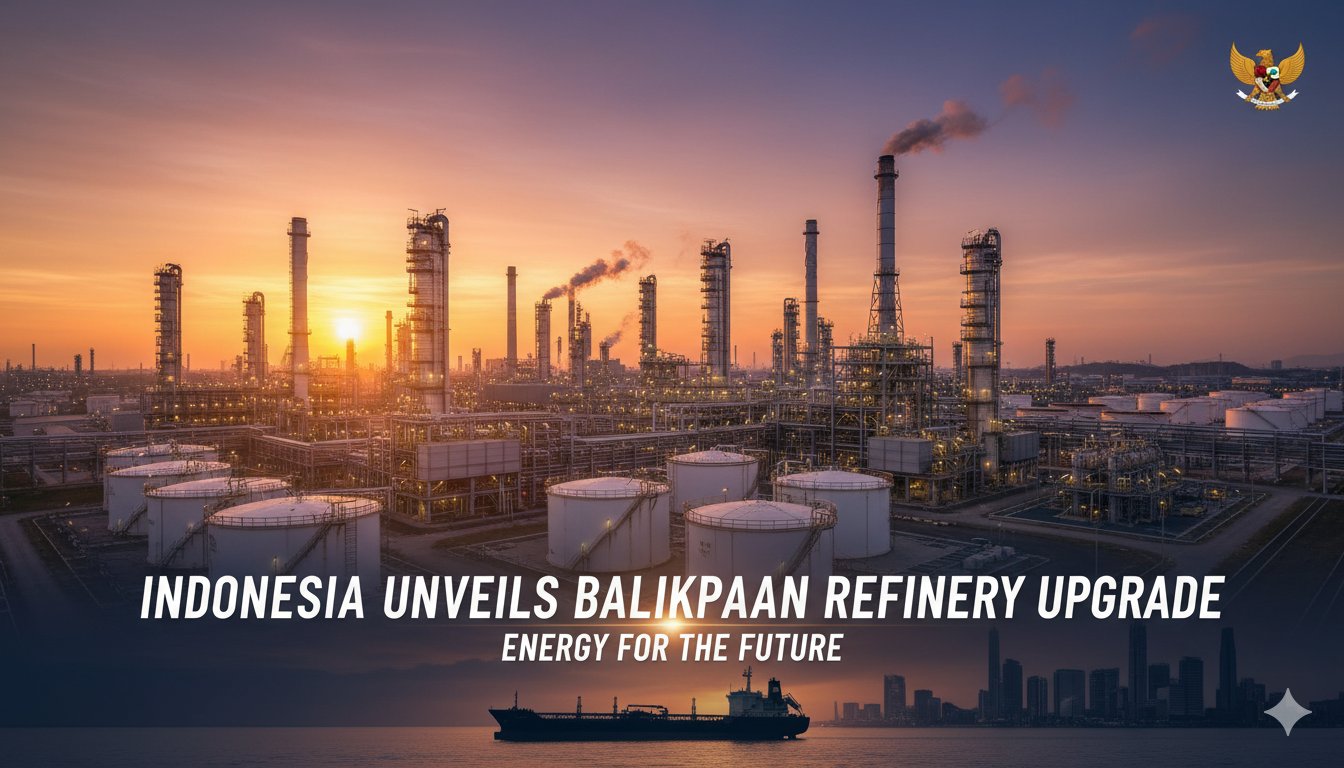
“Indonesia’s state-owned Pertamina has completed a major upgrade to its Balikpapan refinery, increasing processing capacity by nearly 40% and enabling higher production of cleaner fuels, which is set to slash the nation’s reliance on imported gasoline, diesel, and LPG while boosting domestic petrochemical output.”
The upgrade to Pertamina’s Balikpapan refinery in East Kalimantan represents a significant milestone in Indonesia’s push toward greater energy security. The project, valued at $7.4 billion, enhances the facility’s ability to process a wider range of crude oils into high-value products, addressing longstanding gaps in domestic refining capabilities.
Key Project Details
The refinery’s crude processing capacity has risen from 260,000 barrels per day to 360,000 barrels per day, positioning it as the largest in Indonesia. This expansion incorporates advanced technologies, including a residual fluid catalytic cracking (RFCC) unit, which allows for the production of higher-octane gasoline variants such as 92, 95, and 98 ratings. Additionally, the upgrade facilitates the output of lower-sulfur fuels compliant with stricter environmental standards.
Annual production gains include:
Gasoline: Up to 5.8 million kiloliters, covering a substantial portion of national demand.
Liquefied petroleum gas (LPG): Increased to 384,000 metric tons from 48,000 tons.
Petrochemicals: Approximately 283,000 tons, with a focus on propylene at 225,000 tons.
These enhancements stem from the Refinery Development Master Plan (RDMP), which integrates modern engineering to optimize efficiency and reduce operational costs.
Economic Implications for Indonesia
The upgraded refinery is poised to transform Indonesia’s fuel import dynamics. Currently, the country imports around 24 million kiloliters of gasoline annually; the new output could reduce this by several million kiloliters, yielding significant foreign exchange savings. Diesel self-sufficiency is targeted imminently, with plans to halt gasoil imports entirely, supported by rising biodiesel blending mandates.
Further, the facility aims to eliminate jet fuel imports within the next year, shifting the import focus solely to crude oil. This shift not only bolsters national energy sovereignty but also stimulates job creation in the refining and petrochemical sectors, potentially adding thousands of positions in East Kalimantan and related supply chains.
Private fuel retailers will be required to source products domestically from Pertamina, fostering a more integrated market and reducing exposure to volatile international prices. Overall, these changes could save billions in import bills, allowing reallocation of funds toward infrastructure and economic diversification.
Broader Market Impacts
| Refinery Metric | Pre-Upgrade | Post-Upgrade |
|---|---|---|
| Crude Capacity (bpd) | 260,000 | 360,000 |
| Gasoline Production (million kl/year) | Limited | 5.8 |
| LPG Output (metric tons/year) | 48,000 | 384,000 |
| Petrochemicals (tons/year) | Minimal | 283,000 |
| Key Products Added | Basic fuels | High-octane gasoline, low-sulfur diesel, propylene |
On a regional scale, the increased domestic supply is expected to cap gasoline crack spreads in Asia, as reduced Indonesian imports lessen demand pressure on exporters. This could lead to more stable pricing for refined products across Southeast Asia, benefiting consumers but challenging margins for foreign refiners.
Globally, the upgrade aligns with trends toward cleaner energy, as the refinery’s low-sulfur outputs support environmental goals amid tightening regulations. For U.S. energy firms, opportunities may arise in supplying lighter crudes suited to the facility’s design, potentially increasing American exports to Indonesia. Investors in Asian energy stocks should monitor Pertamina’s performance, as enhanced refining efficiency could improve profitability and attract foreign capital.
Strategic Outlook
Government officials emphasize that the Balikpapan upgrade is part of a larger strategy to modernize Indonesia’s six refineries, with total investments exceeding $40 billion planned. This includes future projects tailored for processing U.S. shale oil, further integrating Indonesia into global supply chains. The move underscores a commitment to reducing vulnerability to oil price fluctuations, enhancing fiscal resilience in the face of geopolitical uncertainties.
Disclaimer: This news report offers informational tips based on various sources.











Leave a Reply