
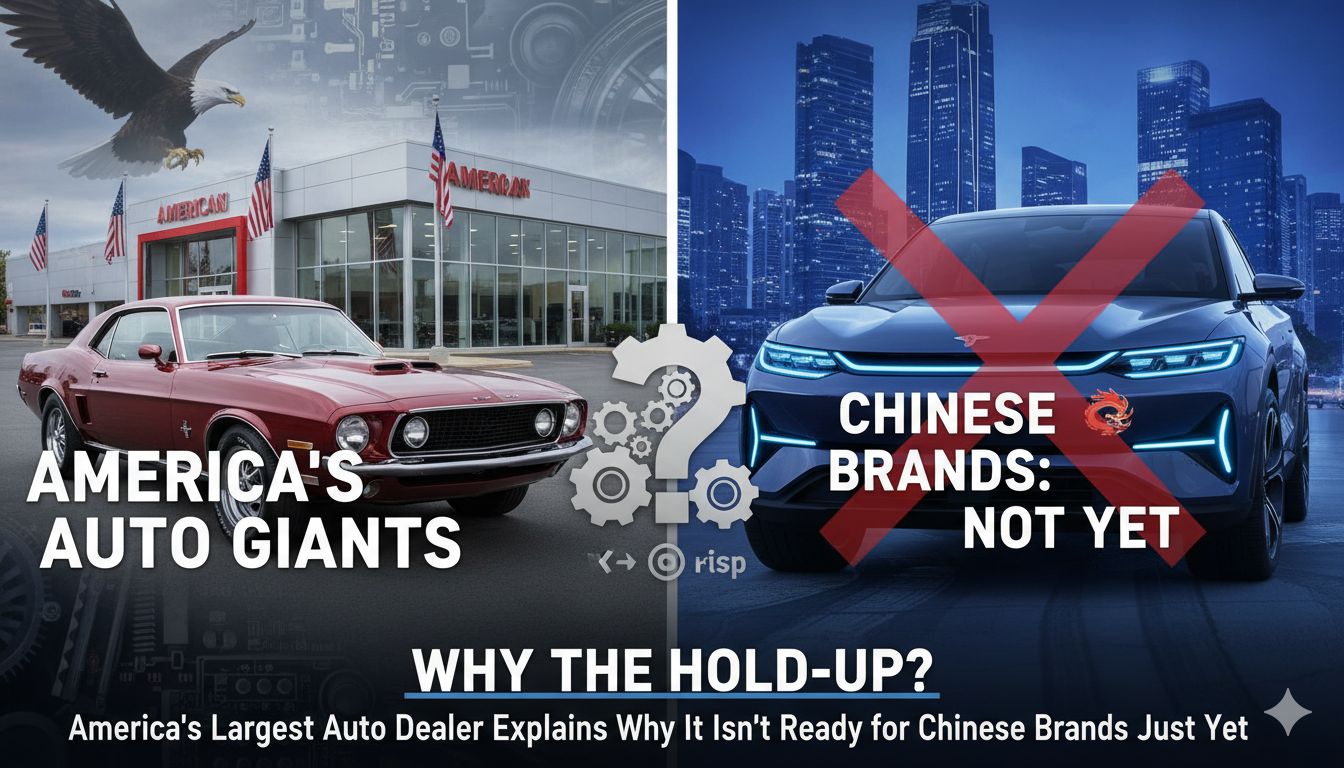
Lithia Motors, currently the nation’s largest auto dealership group by revenue and scale, has signaled it will not rush to adopt Chinese automotive brands in the U.S. market. CEO Bryan DeBoer emphasized that high upfront costs, uncertain return on investment, stringent franchise regulations, and the absence of an established base of vehicles for service and parts revenue make early entry unviable. While the company successfully sells multiple Chinese brands in the United Kingdom, the U.S. dealer model relies heavily on after-sales profits, which would be lacking without existing units on the road. DeBoer remains open to future opportunities but prioritizes economic viability over rapid adoption amid growing discussions about potential Chinese brand entry.
Lithia Motors’ Cautious Stance on Chinese Brands in the U.S.
Lithia Motors has solidified its position as the leading U.S. auto dealership group, surpassing competitors through aggressive acquisitions and operational efficiency. The company’s leadership recently addressed the prospect of introducing Chinese automotive brands—such as BYD, Chery, Leapmotor, or others—into its extensive U.S. network during its latest earnings discussion.
CEO Bryan DeBoer made it clear that Lithia would likely not be among the early adopters for Chinese brands in the United States or even Canada. This perspective stems from fundamental differences in how dealership economics function in the U.S. compared to other markets where Lithia already operates Chinese franchises.
In the United Kingdom, Lithia manages a double-digit number of stores selling vehicles from Chinese manufacturers, including BYD, MG, Chery, Leapmotor, and Jaecoo. These operations benefit from lower barriers to entry. Adding a new brand to an existing facility might cost under $100,000, allowing quick integration into current showrooms with minimal additional infrastructure. This flexibility supports faster market penetration and incremental revenue growth without massive capital outlays.
The U.S. presents a starkly different landscape. Franchise laws and brand agreements often restrict multi-branding or require dedicated facilities, service bays, and specialized training programs. Introducing a new Chinese brand would demand significant new investments in standalone or heavily modified locations, inventory stocking, marketing, and technician certification—expenses that could run into millions per site.
A core challenge lies in the service and parts department, which forms the backbone of Lithia’s profitability. After-sales operations contribute substantially to gross profit, often accounting for 41% or more in recent periods, with high margins in the range of 58%. These recurring revenues depend on a large pool of vehicles in operation requiring maintenance, repairs, and parts replacement over years.
For a new Chinese brand entering the U.S., there would initially be zero units in operation. No existing fleet means no immediate service traffic, delaying the point at which the dealership could recoup its investment through high-margin after-sales business. DeBoer highlighted this as a primary deterrent: without that built-in service pipeline, the overall return on investment becomes unattractive, especially when compared to established franchises with millions of vehicles already on American roads.
Broader industry dynamics add layers of complexity. Chinese automakers have rapidly expanded globally, capturing increasing market share in Europe and elsewhere through competitive pricing, advanced electric vehicle technology, and stylish designs. Their vehicles often undercut equivalents from traditional brands by significant margins, appealing to cost-sensitive buyers. Yet in the U.S., regulatory hurdles—including tariffs on imported vehicles and scrutiny over connected car software—complicate direct entry.
Discussions around potential pathways, such as joint ventures with American manufacturers or localized production, continue to surface. Some analysts anticipate announcements or strategic moves in the near term, possibly involving partnerships that could ease market access while addressing national security and competitive concerns.
Lithia, however, maintains relationships with several Chinese brands and keeps options open. DeBoer noted the company would evaluate opportunities carefully, potentially requiring deeper partnerships that grant more control over pricing, after-sales operations, and service strategies to ensure profitability from day one.
This measured approach reflects broader dealer sentiment. While some retailers view Chinese brands as a potential growth avenue—offering affordable, tech-rich options in a market where new vehicle affordability remains strained—others see risks to existing franchises and the traditional dealer model. The National Automobile Dealers Association has voiced strong support for policies restricting Chinese OEM entry, citing concerns over unfair advantages and industry impacts.
For Lithia, the decision prioritizes long-term financial discipline. The company has built its dominance by focusing on accretive acquisitions and operational leverage in proven segments. Venturing into uncharted territory with Chinese brands would require a compelling economic case that aligns with its reliance on service-driven margins and protected franchise structures.
As the global auto landscape evolves, with Chinese manufacturers continuing to innovate and scale, U.S. dealers like Lithia are positioned to adapt—but only when the numbers add up. For now, the infrastructure demands, investment risks, and absence of service volume keep Chinese brands off the immediate horizon.
Disclaimer: This is a news report based on industry developments and executive statements. It is for informational purposes only and does not constitute financial, investment, or business advice.









Leave a Reply