
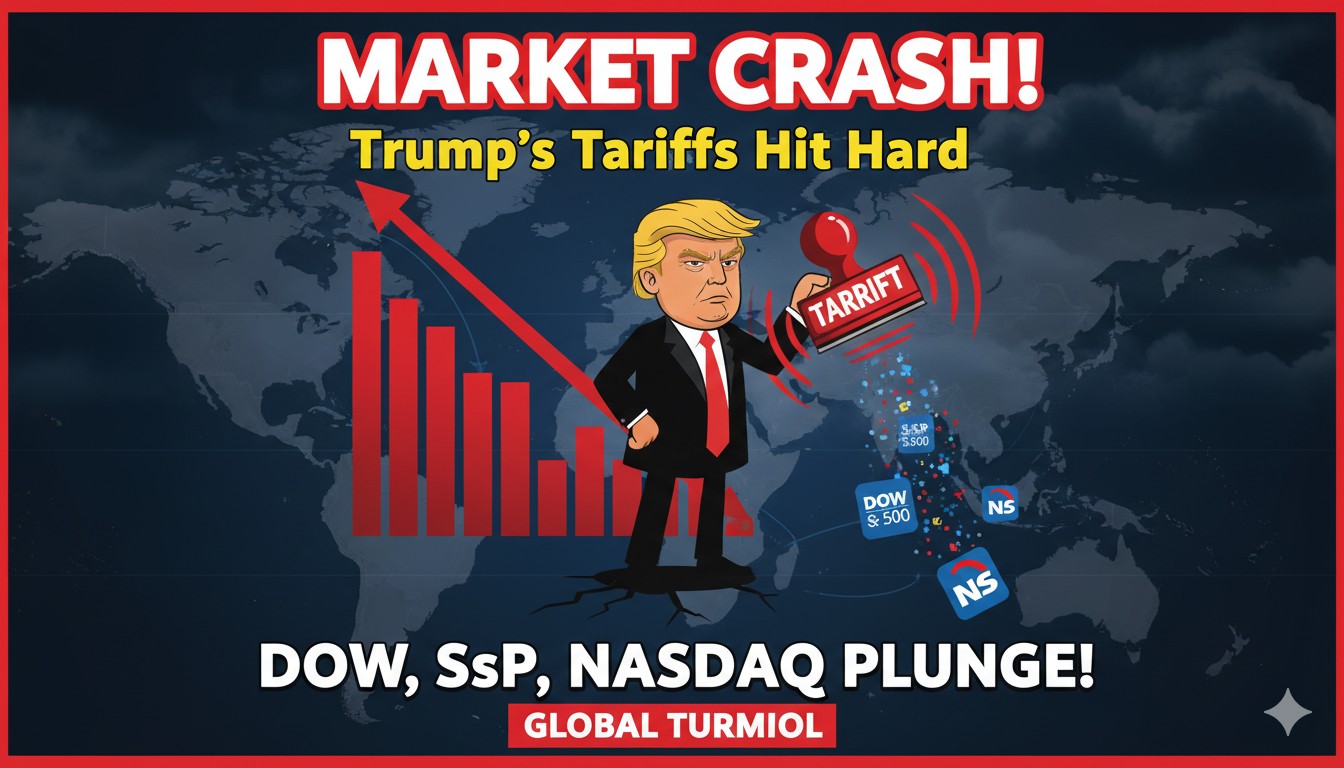
Major U.S. stock indexes fell sharply on Monday amid renewed trade policy uncertainty following President Trump’s announcement of a 15% global tariff rate on imports. The Dow Jones Industrial Average dropped over 600 points, leading the decline, while the S&P 500 and Nasdaq Composite each retreated around 1-1.5%. The move comes after the Supreme Court struck down earlier broad tariffs, prompting a swift pivot to new duties that have rattled investors concerned about potential inflation, supply chain disruptions, and retaliatory actions from trading partners.
Market Performance Amid Tariff Escalation
U.S. equities opened lower and extended losses throughout the trading session as Wall Street digested the implications of President Trump’s rapid escalation in trade measures. The Dow Jones Industrial Average, heavily weighted toward industrial and financial names sensitive to global trade flows, bore the brunt of the selling pressure, declining approximately 1.6% or around 800 points in midday trading before settling with significant losses. The benchmark S&P 500 shed about 1.2%, reflecting broader concerns across sectors, while the tech-heavy Nasdaq Composite fell roughly 1.4%, with megacap technology stocks contributing to the downside amid fears of higher input costs and reduced global demand.
This pullback erased much of the gains from the prior session, when markets had rallied on the Supreme Court’s decision to invalidate many of the previous sweeping tariffs imposed under emergency powers. That ruling had initially sparked optimism about de-escalation in trade tensions, but Trump’s quick response—announcing a temporary 10% global tariff Friday and then raising it to 15% over the weekend—shifted sentiment back toward caution. The new levies, enacted under alternative statutory authority such as Section 122 of the Trade Act of 1974, are positioned as immediate and broad-based, applying to imports from virtually all countries unless specified exemptions emerge.
Investors are particularly focused on the potential for inflationary pressures, as higher import costs could filter through to consumers and businesses. Multinational corporations with extensive overseas supply chains face increased risks, while domestic producers might see short-term advantages if substitution occurs. However, the uncertainty surrounding implementation timelines, potential congressional intervention (given the temporary nature of some authorities), and responses from major trading partners like China, the EU, and Canada has amplified volatility.
Sector and Stock Highlights
Cyclical sectors bore the heaviest weight of the decline. Industrials, materials, and consumer discretionary names led the downturn, as these areas are most exposed to international trade dynamics. Financial stocks also weakened, with some major banks pressured by a sliding U.S. dollar and broader risk aversion.
In contrast, defensive sectors showed relative resilience, though gains were muted. Utilities and certain healthcare names held up better as investors sought shelter. Gold prices climbed as a safe-haven play, while Treasury yields dipped modestly, signaling flight to quality.
Among individual movers, companies reliant on global supply chains saw pronounced selling. Technology giants in the “Magnificent Seven” group faced headwinds, with some shedding 1-2% or more amid concerns over component costs and export markets. Payment processors and software firms also declined, reflecting worries about economic slowdown from trade friction.
Broader Economic Implications
The tariff developments underscore ongoing challenges in U.S. trade policy. The Supreme Court’s ruling limited the use of certain emergency authorities for imposing duties, forcing a reliance on other mechanisms that may face their own legal and political hurdles. While the new 15% baseline aims to address perceived imbalances in global trade, analysts note it could raise effective costs across the economy, potentially trimming corporate margins and consumer purchasing power if sustained.
The U.S. dollar weakened against major currencies, down around 0.3-0.4% in recent sessions, as tariff uncertainty weighed on the greenback’s appeal. This currency pressure could provide some offset for exporters but complicates the outlook for importers and inflation dynamics.
Market participants are closely monitoring upcoming data releases, corporate earnings (including key tech reports this week), and any further statements from the administration or trading partners. Volatility is likely to remain elevated as the policy landscape evolves, with potential for additional executive actions or negotiations in the coming weeks.
Disclaimer: This is for informational purposes only and does not constitute investment advice, financial recommendations, or a solicitation to buy or sell securities. Markets are volatile, and past performance is no guarantee of future results. Always conduct your own research or consult a qualified advisor.







Leave a Reply