
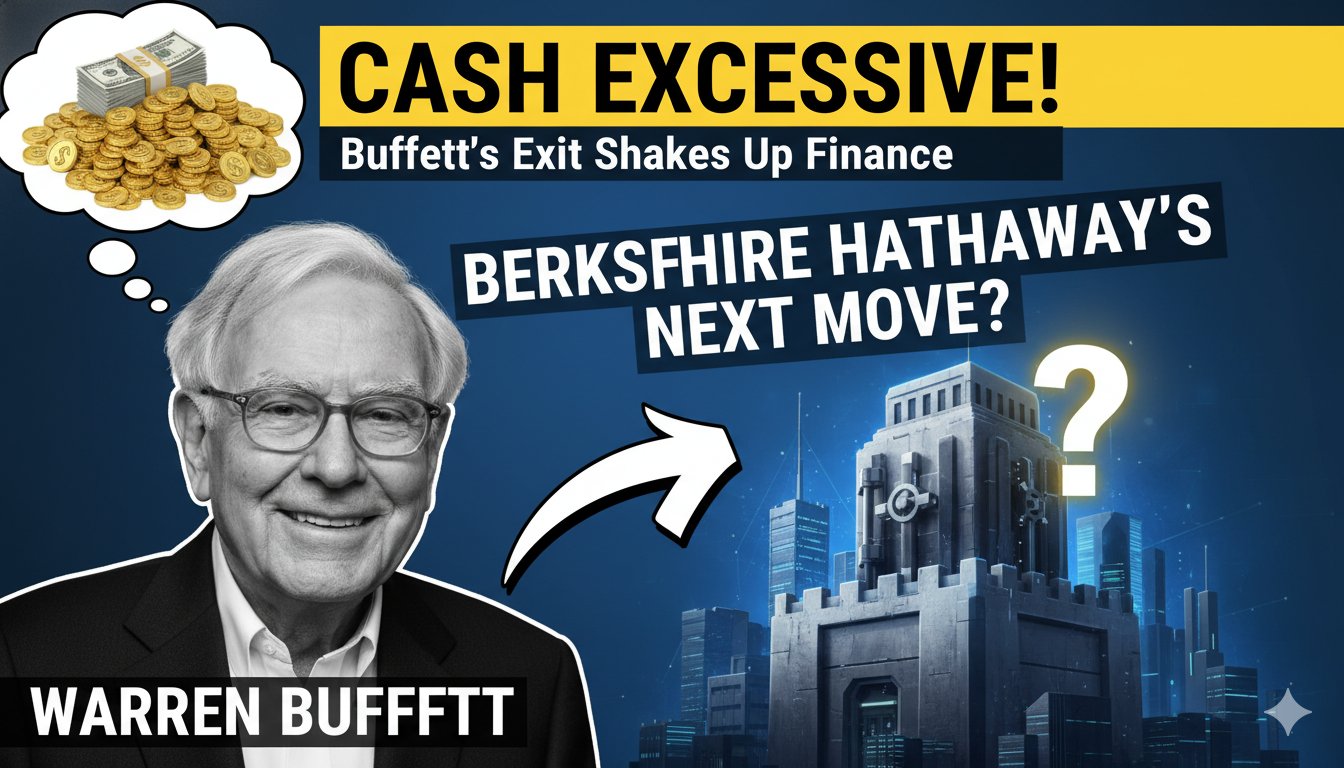
Warren Buffett has stepped down as CEO of Berkshire Hathaway, passing leadership to Greg Abel amid a record cash pile exceeding $380 billion. Investors are watching closely as the conglomerate navigates elevated market valuations, with pressure mounting on how to deploy this capital effectively in a post-Buffett era.
The Dawn of the Greg Abel Era
Berkshire Hathaway has entered a new chapter with Greg Abel assuming the role of CEO following Warren Buffett’s official retirement at the end of 2025. The 95-year-old Buffett, who remains chairman, concludes a remarkable 60-year tenure that transformed the company into a $1 trillion powerhouse. Abel, a longtime Berkshire veteran with extensive experience in energy and non-insurance operations, now holds final authority over capital allocation decisions.
The transition comes at a pivotal moment, as Berkshire sits on an unprecedented cash reserve of approximately $382 billion, largely invested in short-term U.S. Treasury bills. This hoard has grown significantly through net stock sales, including substantial trims in holdings like Apple and Bank of America, reflecting caution amid high market valuations driven by the AI boom.
The $382 Billion Question
Analysts and shareholders alike are focused on what Abel will do with this enormous liquidity. The cash position, built during Buffett’s final years, signals a deliberate pause in aggressive investing due to limited attractive opportunities at reasonable prices. Berkshire has not repurchased its own shares in recent quarters, despite the stock trading below peaks reached in 2025.
Key considerations for deployment include:
Large-scale acquisitions, often dubbed “elephant-sized” deals, in sectors like energy, infrastructure, or utilities where Abel has deep expertise.
Potential resumption of share buybacks if valuations become more compelling.
Pressure from some investors to initiate a dividend policy, given the scale of idle capital yielding modest returns in Treasuries.
Abel’s track record at Berkshire Hathaway Energy demonstrates disciplined growth, with successful integrations of major assets contributing to steady earnings. However, replicating Buffett’s legendary stock-picking and deal-making on Berkshire’s vast scale presents a unique challenge.
Market Reaction and Performance Context
Berkshire shares dipped modestly in early 2026 trading as the leadership change took effect, closing 2025 with a 10.9% gain that trailed the S&P 500’s stronger advance. The stock has maintained positive returns for a decade, underscoring the resilience of its diversified operations in insurance, railroads, utilities, and manufacturing.
Outlook Under New Leadership
| Metric | Value (as of late 2025/early 2026) |
|---|---|
| Cash & Equivalents | ~$382 billion |
| 2025 Stock Gain (BRK.B) | 10.9% |
| Market Capitalization | Over $1 trillion |
| Operating Earnings Growth (Q3 2025) | +34% year-over-year |
Abel is expected to maintain Berkshire’s decentralized model, empowering subsidiary managers while centralizing strategic capital decisions. His approach may lean toward opportunities in energy and industrial sectors, potentially diverging slightly from Buffett’s heavy equity focus. With market valuations remaining elevated, patience could continue to define strategy, preserving dry powder for future downturns or compelling deals.
The coming months will reveal whether Abel opts for transformative moves or steady stewardship, shaping Berkshire’s trajectory in a competitive landscape.
Disclaimer: This article is for informational purposes only and does not constitute investment advice or recommendations.






Leave a Reply